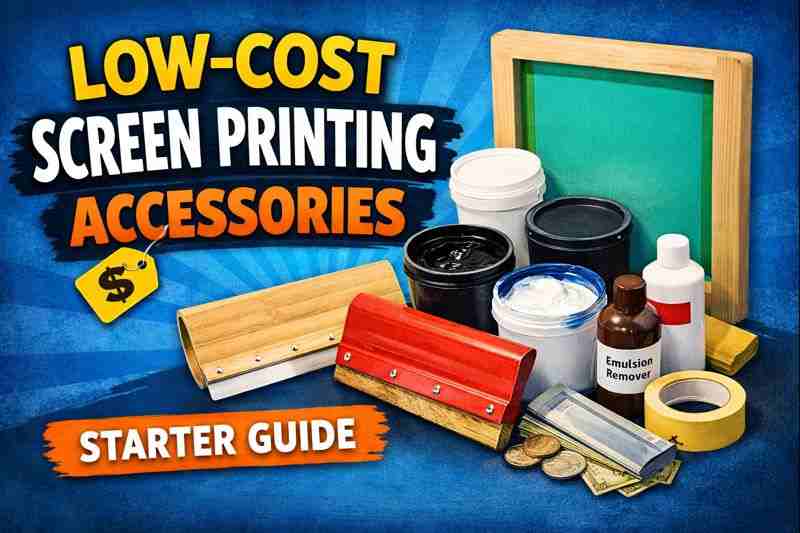

Introduction — Ready to Print with Small Money and Big Ambition?
If you’re searching for screen printing accessories that won’t empty your wallet, you’re in the right place. Screen printing is one of the most accessible crafts-to-business pipelines: minimal space, scalable processes, and—most importantly—affordable starter gear if you know what to buy. This guide cuts through the fluff: practical items, smart trade-offs, budget numbers, and links to reliable suppliers so you can start printing smart, not expensive.
Why a Low-Investment Approach Makes Sense
Starting small keeps risk low while you learn workflows, test markets, and refine designs. Many hobbyists and micro-business owners begin with a tabletop kit or carefully chosen single-piece tools rather than an entire production line. You can scale later as demand and margins justify upgrades. Industry suppliers and starter-kit vendors confirm that you can set up a functional hobby/side-hustle printing workspace for a fraction of full-production costs.
Starter Essentials: What to Buy First (and Why)
Below are the non-negotiable, budget-friendly accessories that let you print decent-quality work from day one.
Core essentials
- Screens & Frames (pre-stretched or wooden frames): buy a few common sizes (e.g., 15×20″, A3/A4 for small projects). Polyester mesh in 110–160 mesh range covers most apparel work. ScreenPrinting.com+1
- Squeegees (one soft and one firm, ~70–90 durometer): size to match your largest screen width. Squeegees control ink deposit—cheap models are fine to start. bucketsofink.com
- Inks (start with plastisol for durability and ease; add water-based later for softer hand-feel): plastisol is forgiving for beginners and doesn’t dry quickly in the screen. ScreenPrinting.com
- Emulsion & Emulsion Remover: essential for making stencils. Buy a small kit to practice exposing and reclaiming. ScreenPrinting.com
- Exposure Source (budget options): a small LED exposure unit or a DIY exposure box; some beginners even use strong daylight/sunlight techniques for test prints. ScreenPrinting.com+1
- Basic Chemicals & Clean-up Supplies: screen degreaser, tape, pallet/hinge clamps, scrub brushes, spatulas.
Nice-to-have, low-cost helpers
- Scoop Coater — spreads emulsion evenly and conserves material. Reddit
- Registration Tools — simple registration pins or a cardboard jig suffice at first. ScreenPrinting.com
- Flash Cure or Heat Source — a small flash dryer is ideal, but a heat press or household iron for curing small runs can work as a low-investment stopgap (with careful testing).
Quick Comparison Table — Budget vs Pro Accessories
| Purpose | Low-Investment Option (Good for Starters) | Pro/Upgrade Option (When Scaling) |
|---|---|---|
| Screens | Pre-stretched polyester frames (110–156 mesh) | High-tension aluminum frames, custom mesh counts. (plastisol-inks.com) |
| Exposure | DIY LED box / Sun exposure | Dedicated LED exposure unit or vacuum exposure table. (ScreenPrinting.com) |
| Ink | Small tubs of plastisol | Bulk plastisol, specialty inks (discharge, puff, metallic). (ScreenPrinting.com) |
| Curing | Household heat press or iron (test thoroughly) | Conveyor dryer or industry flash dryer. (ScreenPrinting.com) |
| Press | Tabletop single-station kits | Multi-station manual/automatic presses. (ScreenPrinting.com) |
Smart Buying Tips — Stretch Your Budget Further
- Start with a kit—but inspect contents. A starter kit bundles essentials and can reduce initial research time, but check mesh counts and ink quality before buying. Reputable kit vendors include established suppliers that also offer education and replacement parts. ScreenPrinting.com+1
- Buy consumables in small quantities while learning. Don’t overstock inks or chemicals until you know what you’ll use regularly. ScreenPrinting.com
- Choose versatile mesh counts. A mid-range mesh (e.g., 110–160) handles most apparel prints; higher mesh for halftones is for later. plastisol-inks.com
- Repurpose household items for non-critical tasks. Use a household iron, foam boards, and clamps for early testing—just validate curing and colorfastness before selling garments. YouTube
- Buy used or refurbished for big-ticket items. If you want a press or dryer, used equipment can offer huge savings—inspect condition and tension for screens.
Avoiding Common Beginner Mistakes
- Skipping test prints: Always test cure times, washfastness, and opacity before committing to a run.
- Overbuying mesh types: Pick a few versatile mesh counts to learn ink behavior before expanding. plastisol-inks.com
- Using the wrong squeegee durometer: Heavier inks need softer blades; fine detail needs firmer blades. Keep at least two types.
The Final Pull: Your Journey Starts Now
Your screen printing adventure doesn’t require a massive loan or a warehouse. It starts with a squeegee, a screen, and a relentless drive to learn. By strategically acquiring these core screen printing accessories, you’re not cutting corners—you’re building a foundational understanding of the craft that no automated press can teach you.
Ready to get your hands dirty?
Share your biggest low-budget win or your most pressing question in the comments below. What’s the one tool you’re most curious about? For more deep dives into reclaiming screens or dialing in exposure times, explore our [Library of Guides] and keep the ink flowing